About the Artist
Shanta SamantaSarvaiya
Born 1975, Haldia, West Bengal · Vadodara, India
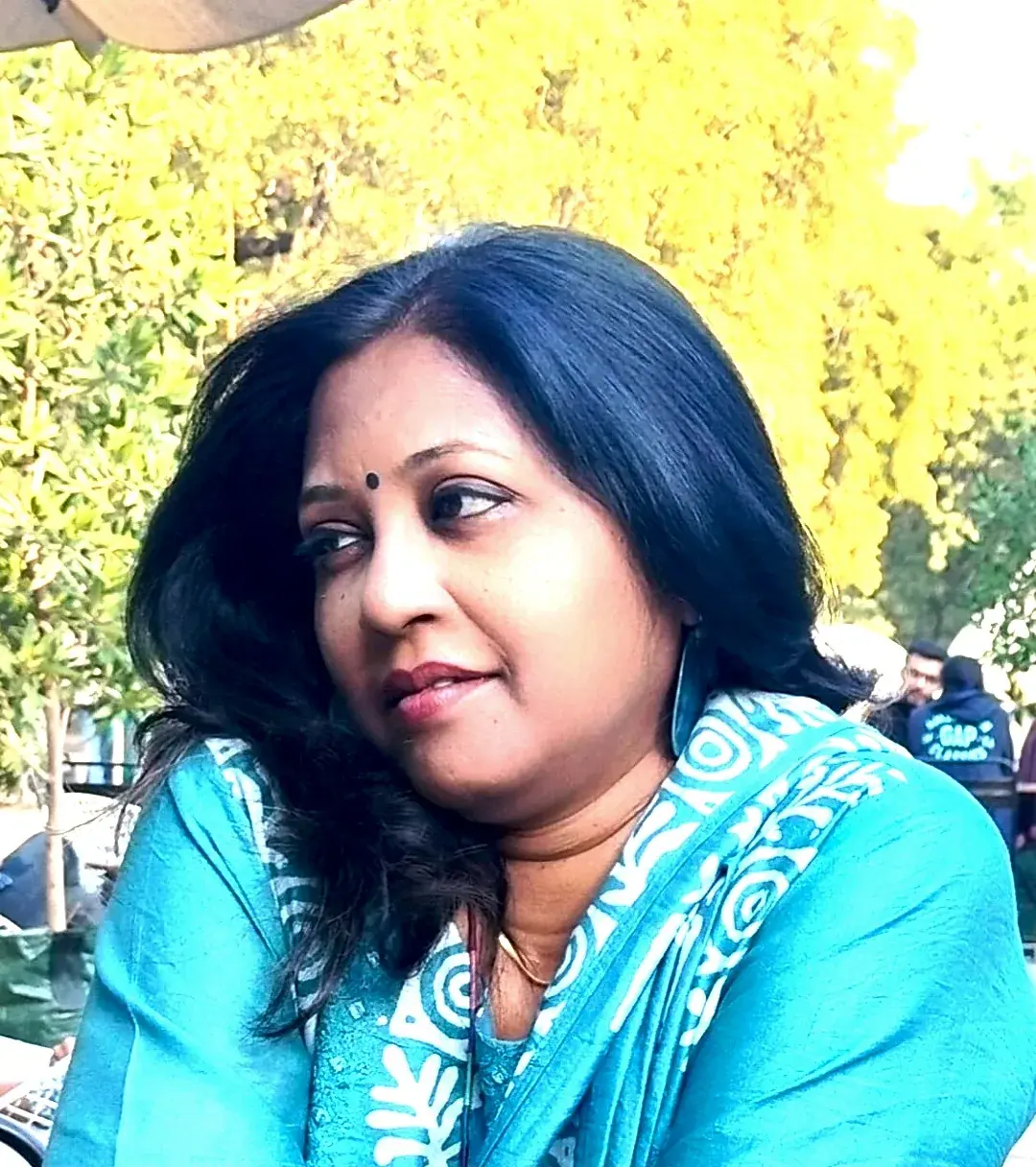
Grew up in a happy middle-class home in Haldia, West Bengal, drawn to art, nature, games and freedom from an early age. Made her first sculpture — a Durga — in second grade, with strong encouragement from her parents. Initially studied science before switching to art, later saying her science background actually helped her sculpture practice: bronze casting, metal casting and patination all demand real chemistry and technical precision.
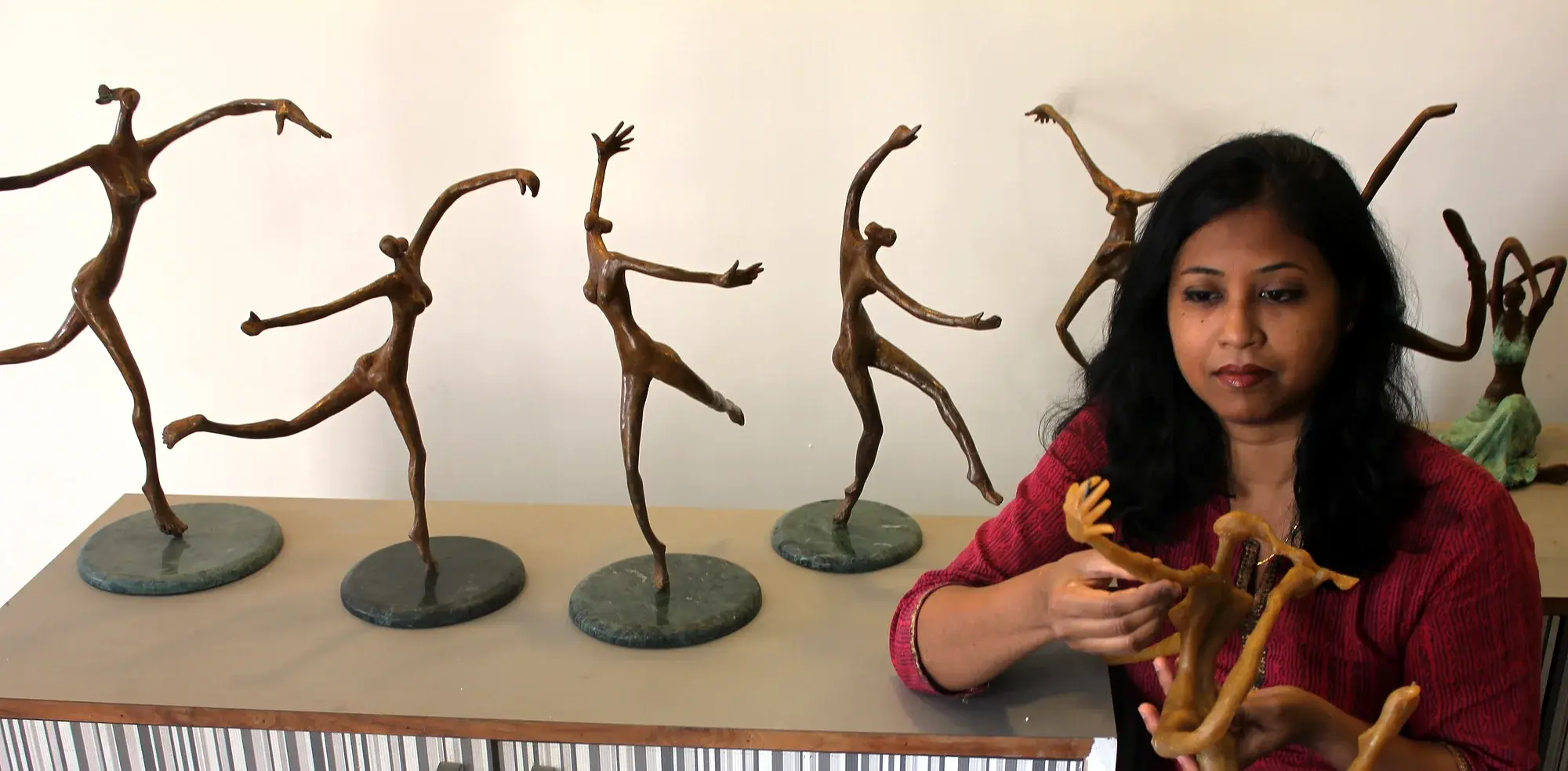
Bronze — her preferred material for being timeless, durable, expressive, technically challenging, and for the beauty of its patina.
Education
- BFA — Faculty of Fine Arts, The M.S. University of Baroda
- MFA (First Class), 2001 — same institution
- PhD in Sculpture — The M.S. University of Baroda
- Trained under Prof. Dhruv Mistry and Prof. Raghav Kaneria
“Many of my Bronze creations are like a poetry of innocence of childhood and the wisdom and maturity of womanhood.”
Philosophy
Almost all of her sculptures center on women — not simply as beautiful figures, but as symbols of sacrifice, resilience, nurturing, strength, struggle and transformation. Her work has evolved from sculptures of childhood innocence toward mature representations of womanhood and social realities: feminine identity, motherhood, mythology, nature, social hypocrisy, freedom, urban life, responsibility, spirituality.
“I find there is a deep feminine connection between mother Earth (nature) and women, both vital for creation and nurturer of life and both are extremely exploited for their resources.”
Influences
Classical Indian art — temple sculpture, manuscripts, miniature paintings — especially after a study tour to Badami, Aihole, Pattadakal and Hampi. Also draws on Mahishasura Mardini imagery, Naari Shakti, and the theme of good vs. evil.
International
Pablo Picasso
His remarkable versatility and innovative spirit — experimenting across mediums, even incorporating found objects.
Henri Matisse
His masterpiece Dance, capturing a moment of pure, unbridled freedom and joy as figures whirl around in space.
Andy Scott
Met him at his studio during a Commonwealth project in 2012 — his monumental, larger-than-life sculptures, often built single-handedly, left a lasting impression.
Louise Bourgeois
Her sculptures and installations reassert the female body as a subject of artistic exploration rather than mere objectification.
Indian
Ramkinkar Baij
The raw energy and dynamic movement captured in his sculptures.
Prof. Raghav Kaneria
Her Guru — his Bull sculpture exudes astonishing power and fluidity, profoundly lyrical and rooted in his rural background.
Prof. Dhruva Mistry
Her teacher during her Master's degree — his reclining figure sculpture and unwavering work ethic remain a lasting influence.
Awards & Recognition
Awards
- AIFACS Award, New Delhi (1998)
- AIFACS Millennium All India Art Award, Ahmedabad (2000)
- Gujarat State Lalit Kala Akademi Awards (1999 & 2002)
Scholarships
- National Cultural Scholarship (2000–02)
- Lalit Kala Akademi Scholarship (2003–04)
A fuller record of solo shows, group exhibitions, art fairs and public collections is on the Exhibitions page — including 4 solo shows and collections held by 8 institutions and private collectors.
Academic & Research
Assistant Professor, Faculty of Fine Arts, Sculpture Department, The M.S. University of Baroda
Assistant Professor in the Sculpture Department, Faculty of Fine Arts, The M.S. University of Baroda, since 2013 — following an earlier appointment as Temporary Lecturer there in 2002–03. Holds a PhD in Sculpture from the same institution. Researcher, PhD-scholar mentor, curriculum developer, and department leadership roles. Research themes: memory, transformation, materiality, the human body, collective memory, cultural narratives, everyday objects, participatory installations. Has organised and participated in numerous hands-on workshops — Terracotta, Raku, Dokra, glass and ceramics. Collaborated with the British Council on a research project, "Ecology and its Sustenance," with Dumbarton Academy, Scotland.
On Contemporary Art
Believes artists should engage with the issues of their time — war, environment, climate change, sustainability, mental health, technology, digital art, identity, gender, race, globalisation, freedom of expression, public art, and the accessibility of art. Views art as socially engaged, not merely decorative.